 Brain Reclaim Protocol
Your brain isn’t broken.
It’s been hijacked.
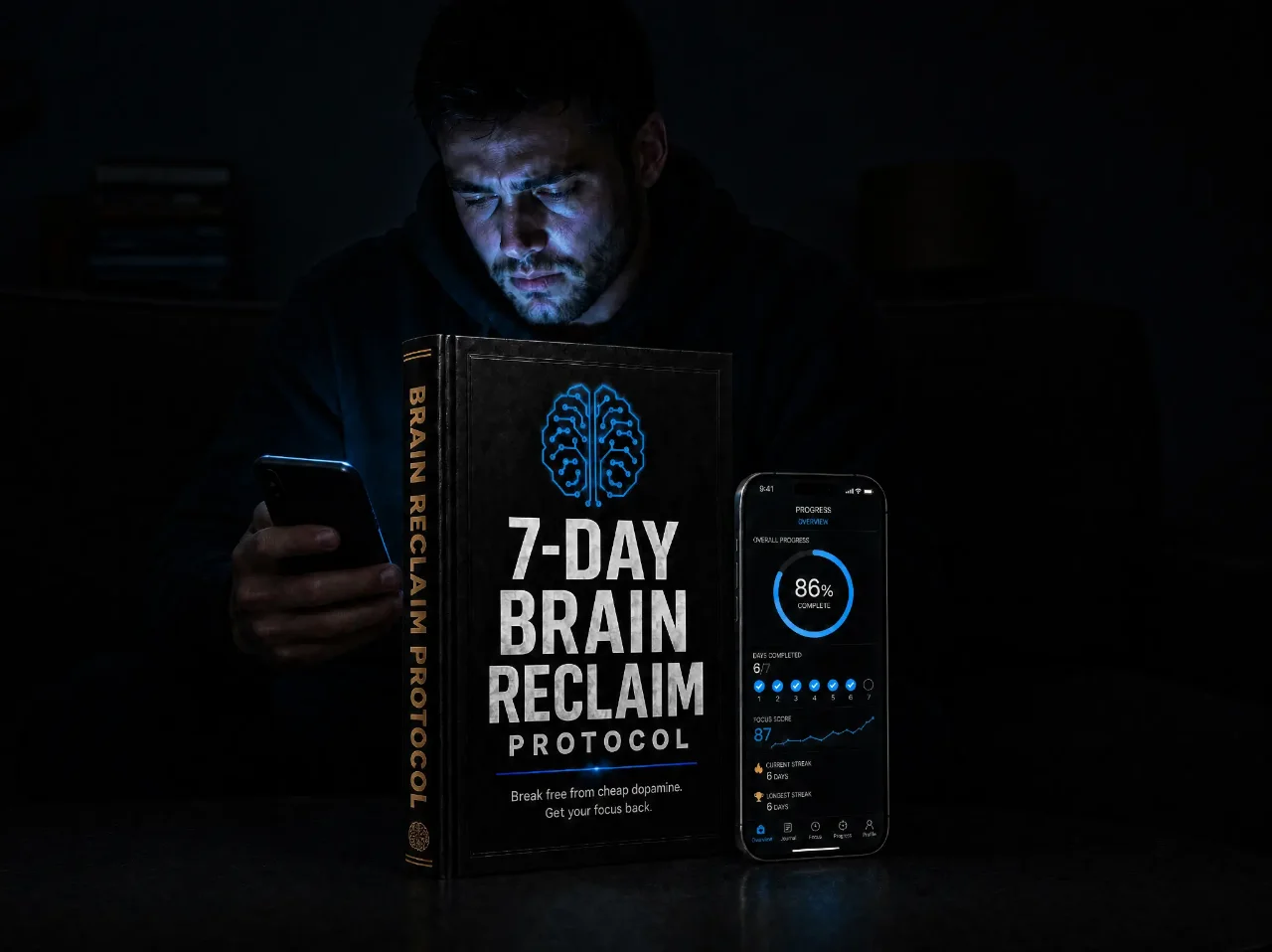
The 7-Day Brain Reclaim Protocol recalibrates your fried reward system and gets you back to 2–3 hours of daily focus without willpower, streaks, or monk mode.
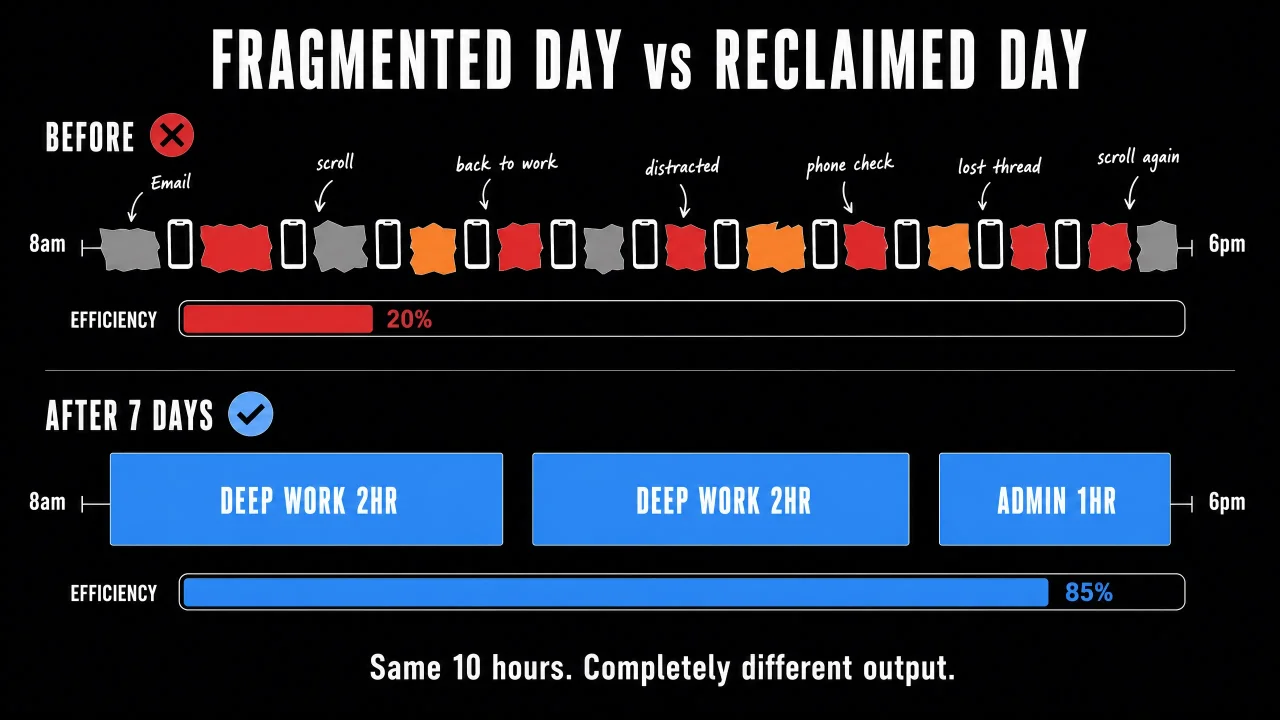
Your first 2 unbroken hours on one thing, tomorrow morning. By Day 7, doomscrolling, incognito tabs, and 1am Netflix binges don’t run your life.
Sound familiar?
You sit down to work. Twenty minutes later, you’re on your phone.
You didn’t decide to pick it up. You just noticed it was already in your hand.
You open a tab to research something. You close it 40 minutes later having learned nothing useful. You tell yourself you’ll check Instagram for a second. You resurface half an hour later, vaguely angry at yourself.
Phone while eating. Texting while walking. Something playing in the background while you do literally anything. Silence started feeling wrong somewhere along the way, and you can’t remember when.
And it’s not just the phone. It’s the loop. Doomscrolling. Porn. Netflix. Gaming. Different screens, same circuit. And every year it pulls a little tighter, and your best hours disappear a little faster.
You’ve tried screen-time limits. App blockers. Going cold turkey. Deleting everything on a Sunday night, full of resolve. But nothing sticks past day three.
The thing is, you’re actually not lazy, and you’re not weak. You’re running a stone-age reward system against a trillion-dollar industry engineered to defeat it. Your mind feels like a browser with thirty tabs open, it’s no wonder you can’t focus. But what to do?
I built this because I needed it
Hugo here. Long time doomscroll enthusiast and YouTube binger.
For most of my adult life everything was comfortable. Life was reasonably in order – friends, work, hobbies. No real complaints and nothing ever wrong enough to force a change. But still, I couldn’t help but feel a growing sense of unease. I knew I was coasting. The days, weeks and months would go by and it felt like I wasn’t quite moving in the direction I wanted. I’d reach the end of the day wondering how time had passed so quickly when I’d done so little.
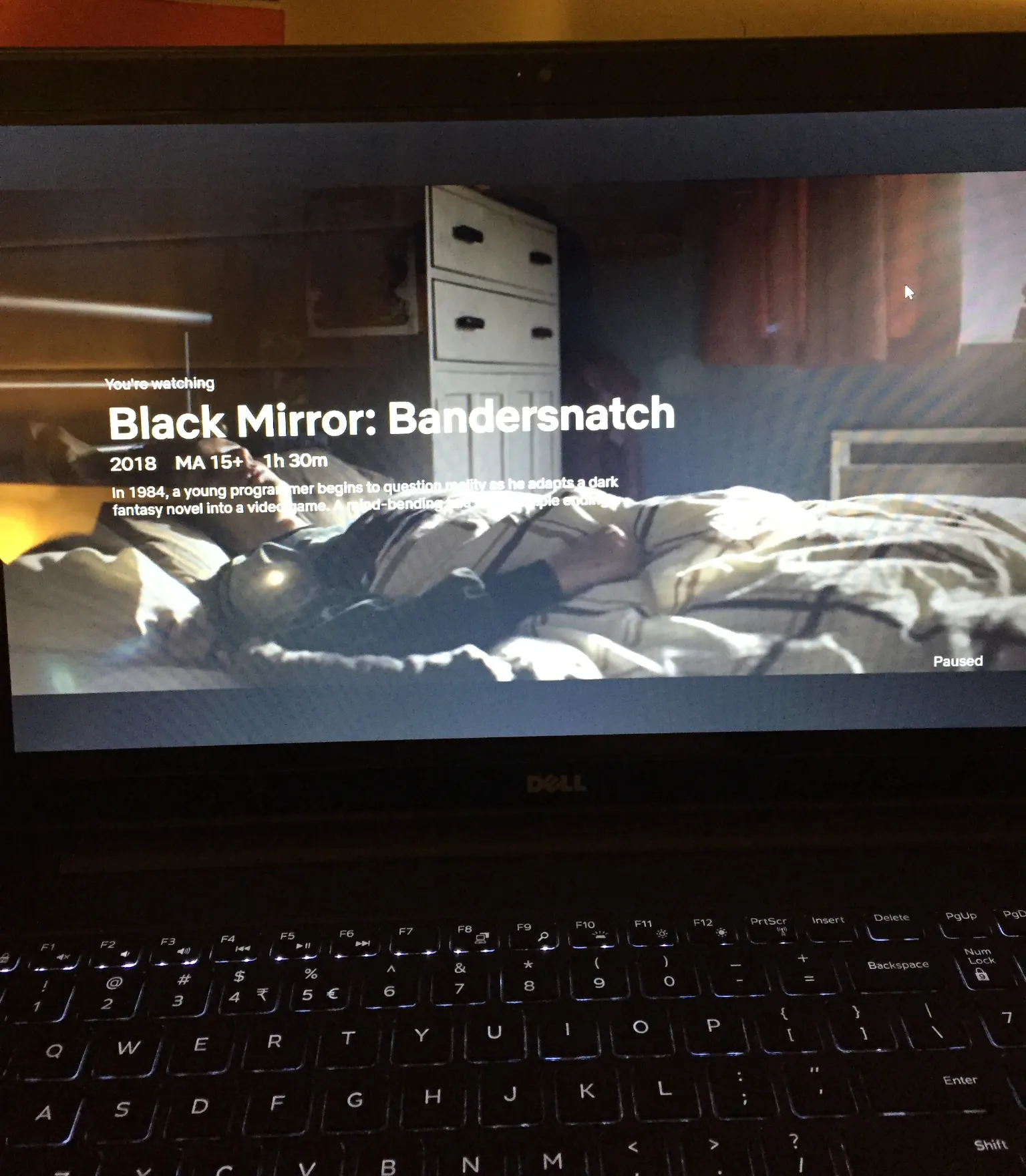
I had goals, aspirations and things I wanted to do, but somehow my focus could never remain directly on them. I’d start a 45-minute task at 10am and find myself finishing it off at 10pm that night. Somewhere in between:
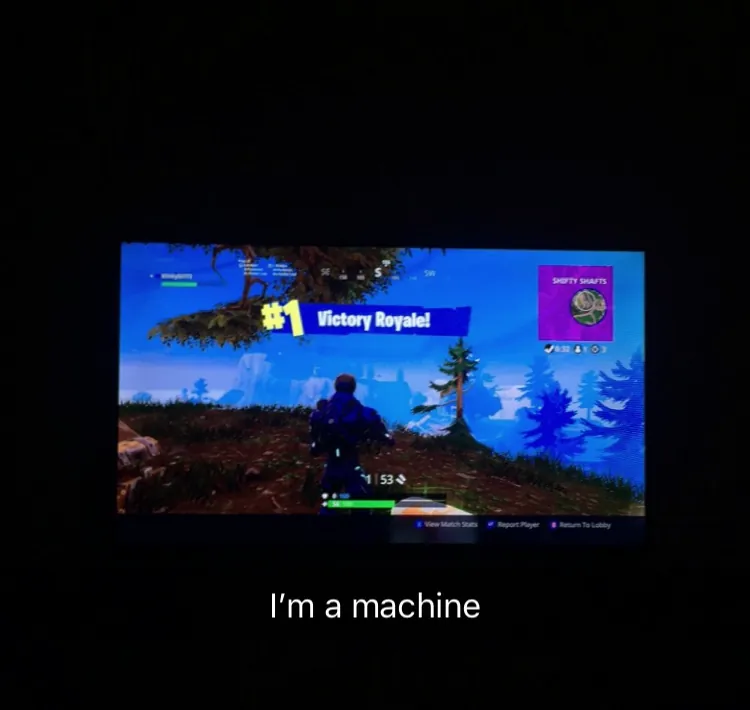
Rinse and repeat some version of this most days of the week. Needless to say, my dopamine was fried. My ability to focus on important yet ‘boring’ tasks for any meaningful amount of time was virtually non-existent. I became more and more frustrated because I knew what was happening, and yet I was struggling to change anything.
And it wasn’t through lack of trying. Airplane mode/Do Not Disturb, phone in another room, deleted apps, monk mode, ‘detox’ days. It’d help for a while. But the thing was, I was never going to give these devices up. Not fully or forever anyway. I still wanted to stay connected – message my friends, share videos, be entertained. And with this came cravings, temptation and more binges. My days were always going to be at risk.
I grew tired of falling into the same loop. I was letting my days pass with no intention behind my hours. After a while it made me sick to my stomach. Was I really going to give my best years to a screen? One thing I knew for sure:
I wasn’t going to be on my deathbed wishing I watched more reels.
I knew I was capable of more.
Something had to change…
The turning point
Here was my core realization.
If screens were always going to be a part of my life, I needed a way to protect my mind and spend my time with intention. Willpower clearly wasn’t going to be enough. It did nothing for my fried dopamine receptors and cravings that stole my focus and desire for anything meaningful.
So with a lot of trial and error and deep diving down the neuroscience rabbit hole, I began forming a system. This would become the backbone of my next couple of years and help change the trajectory of my life.
The system I developed needed to do three things:

A couple of years later and life looks very different now. I won back my time, work for myself, and have the freedom to live on my own terms. My motivation, focus and mental clarity are consistently good. I’m not saying it’s perfect, I still love some brainrot time as much as the next guy. But with this system you can quickly refocus, clear the fog, and build real momentum in your life.
And once you regain control of your time and your mind, the identity shift is tremendous. Things that I used to crave in the past – porn, Netflix binges, video games – don’t really hit the same anymore. I’m not saying you have to go cold turkey, but you might find you want to, like I did.
That’s the protocol you see here. It’s rebuilt and refined so any man can run it. Every step laid out, every decision pre-made, nothing to figure out in the moment.
If you do the steps, it works. That I can promise.
You’re not the only one
If my story sounded familiar, that’s because it isn’t just mine.
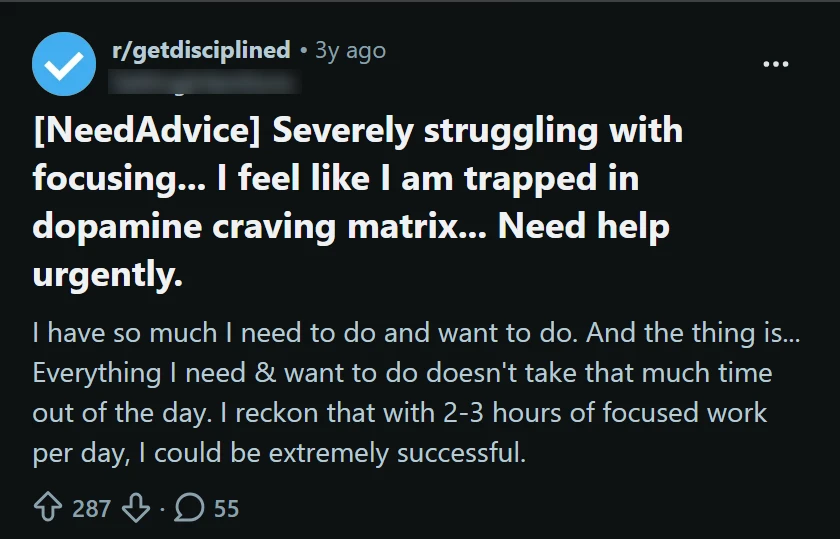
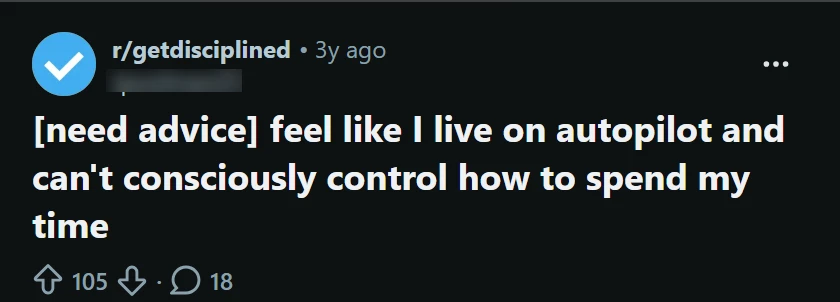
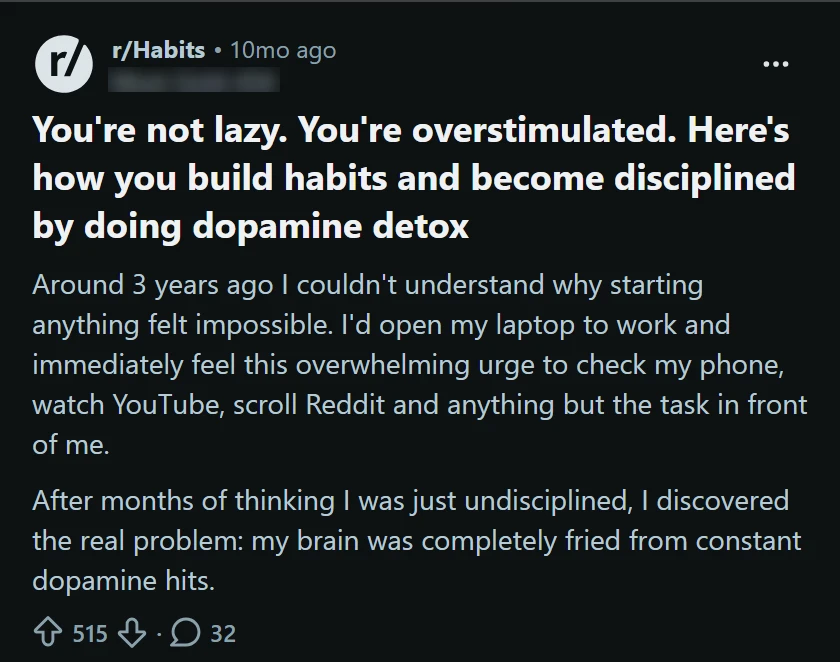
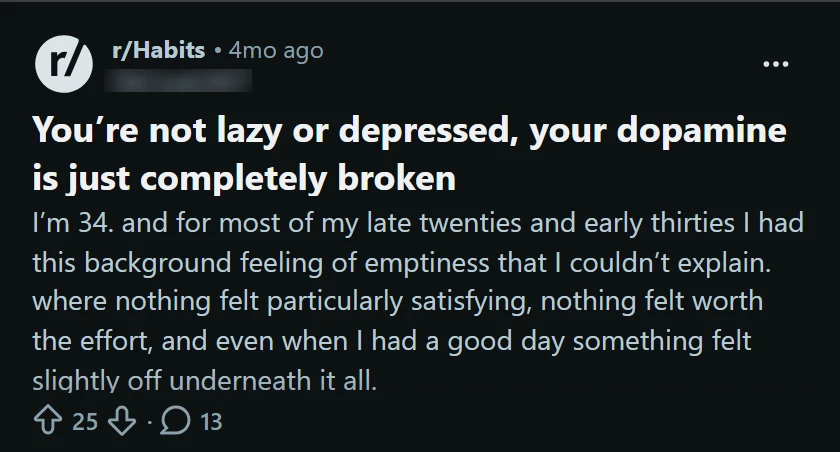
These aren’t customers or testimonials. They’re public posts from the communities where men open up about this – thousands of them, describing the same loop, often in the exact same words. Proof that what you’re feeling is an epidemic, not a personal failing.
The science under the system
Remember that neuroscience rabbit hole? Here’s what’s at the bottom of it.
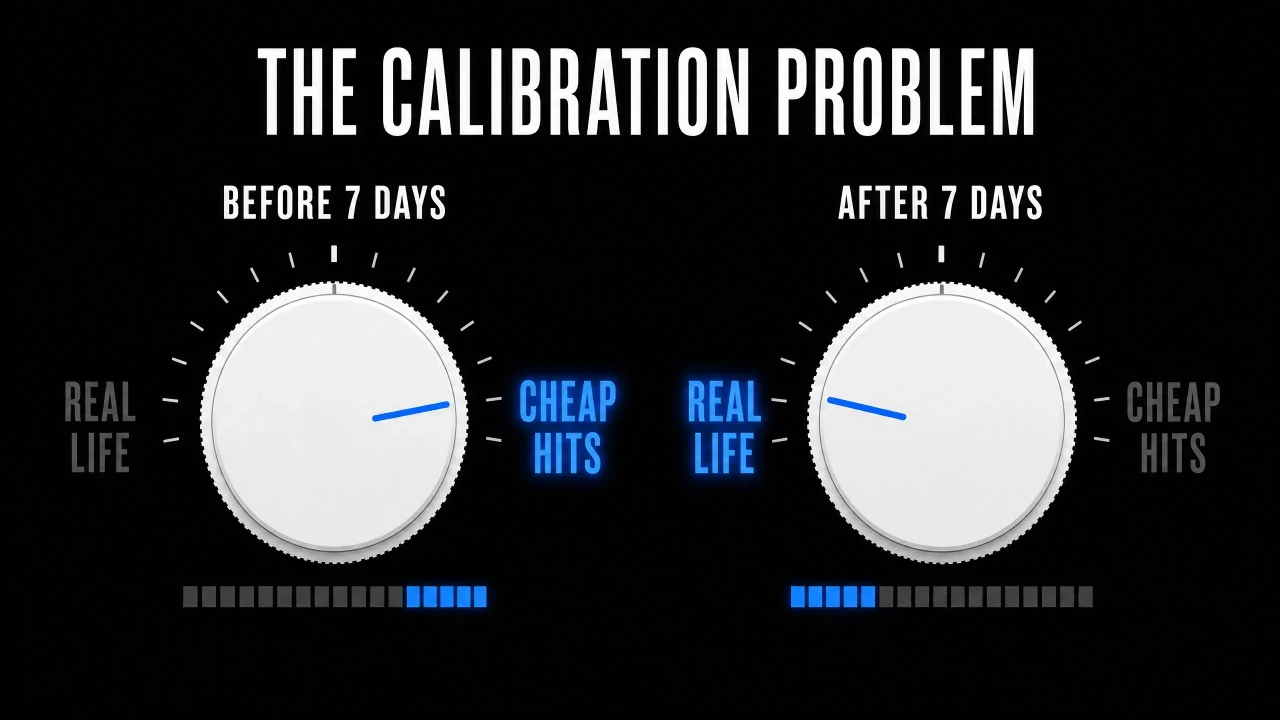
Your reward system adapts to overstimulation. Every scroll, notification and autoplay video delivers an engineered hit of anticipation to your reward system. Thousands of hits a day, year after year – and it adapts by turning the volume down on everything slower than a feed.1 Work goes quiet. Books go quiet. Real life goes quiet. That’s why deep focus feels impossible – not a character flaw, a calibration problem. The recalibration leg of the protocol exists to reverse exactly this.
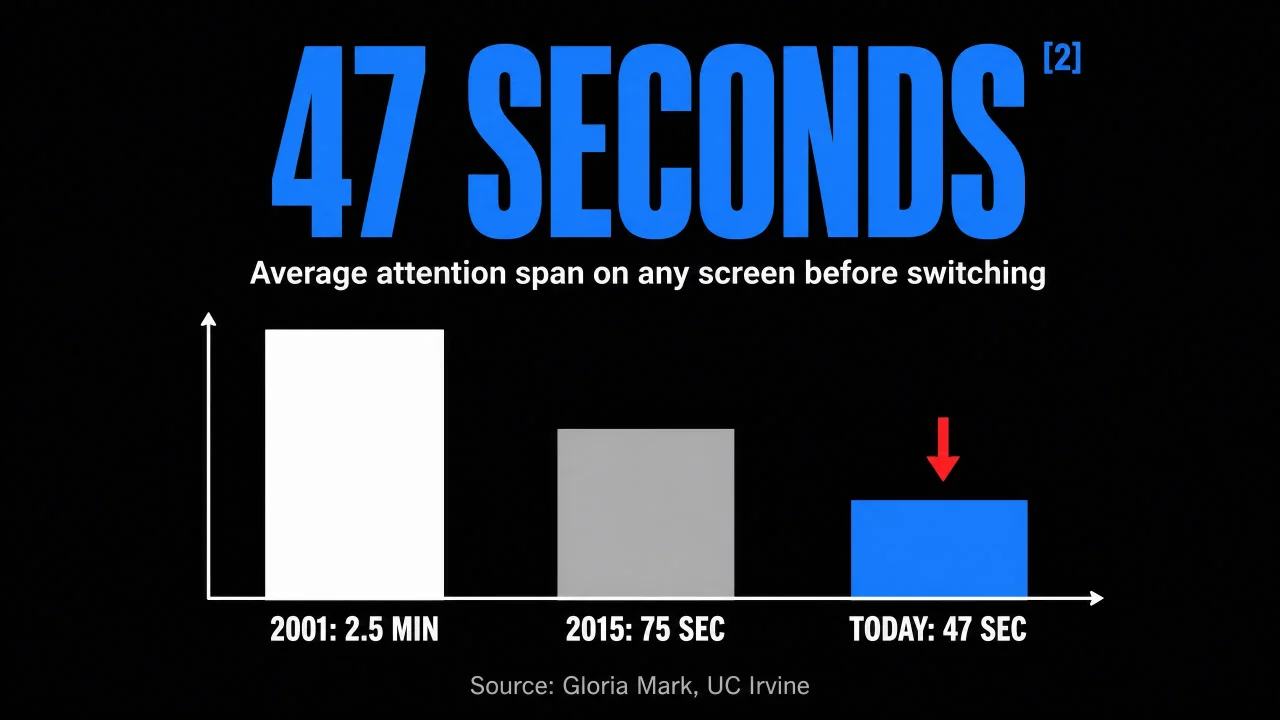
Your attention span isn’t what it was – measurably. Research tracking real screen behaviour puts average attention on any screen at about 47 seconds – down from roughly 2.5 minutes two decades ago.2 You’re not imagining the decline.
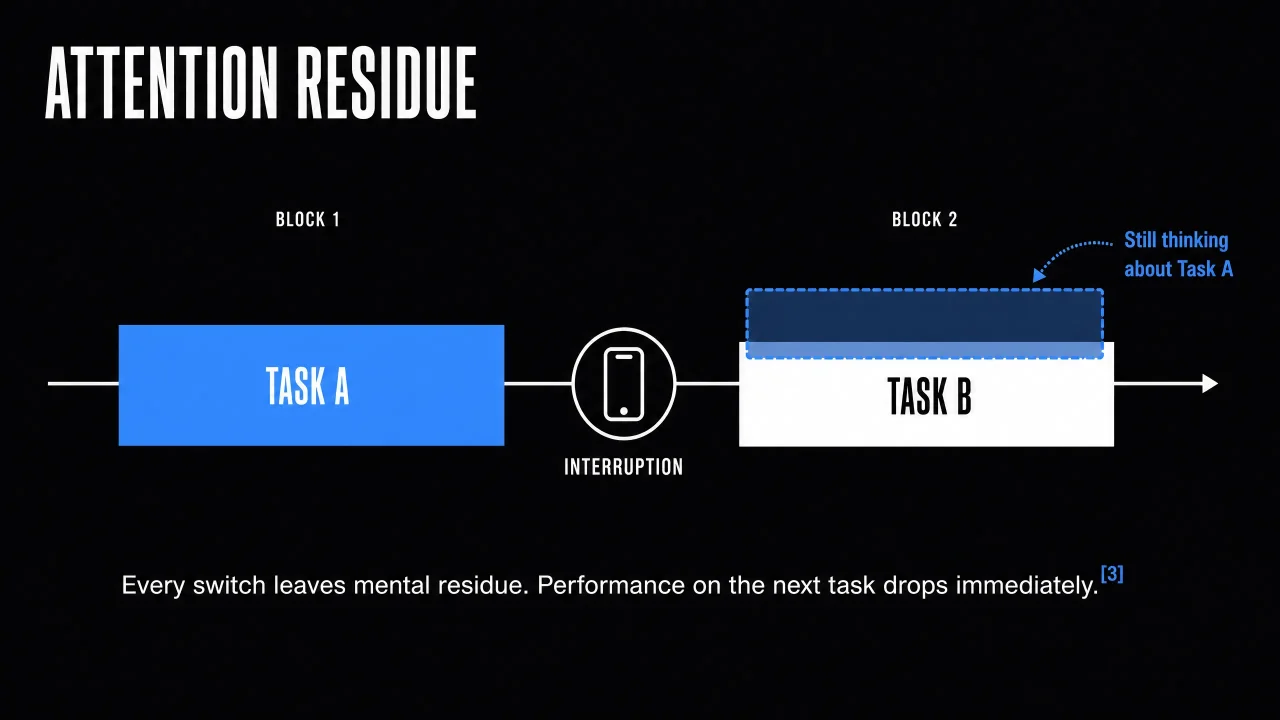
One wrong tab poisons the next two hours. “Attention residue” research shows every switch leaves part of your mind stuck on the last input, degrading whatever comes next.3 You’ve felt this – it’s why flow never came back after “just checking something.” And it’s why the protocol trains unbroken time, not total time.
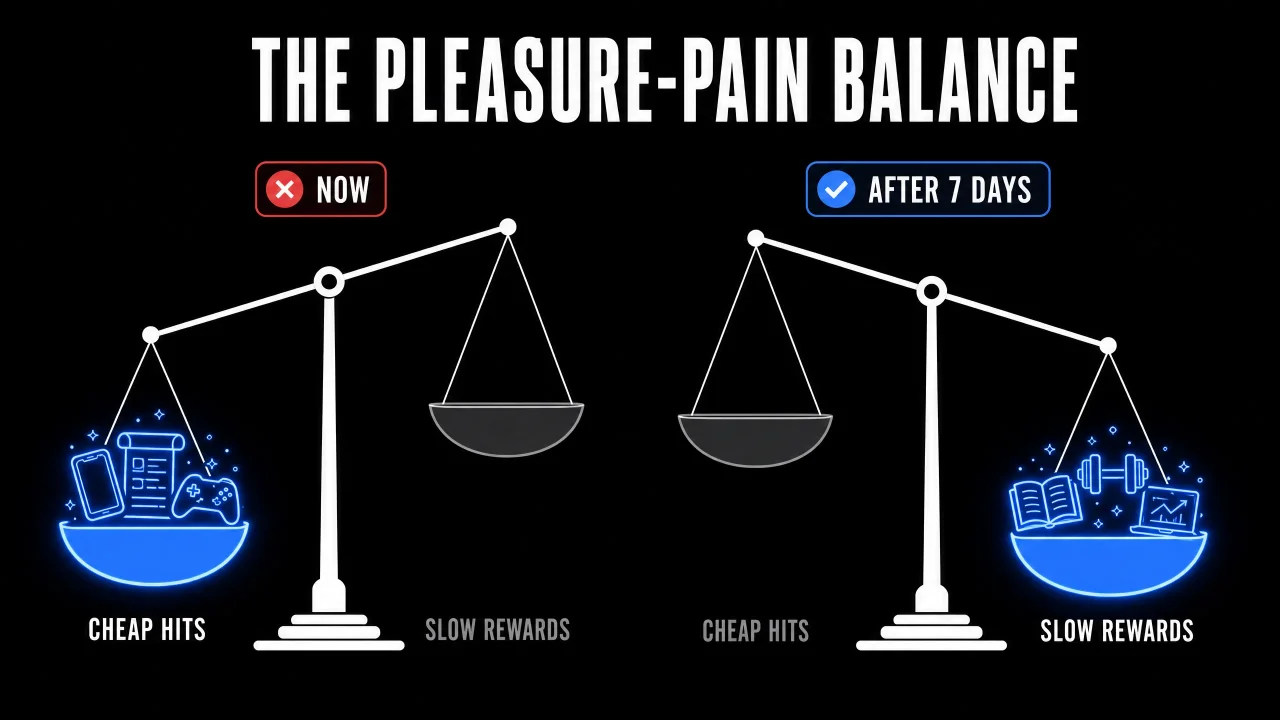
The rebalance is real. Clinical work on reward describes a pleasure–pain balance that resets when cheap stimulation stops and slower rewards take its place.4 That’s the recalibration leg – and it starts moving in days, not months.
Pre-made decisions beat willpower – in the data. A meta-analysis of nearly a hundred studies found that deciding when, where and how you’ll act in advance dramatically outperforms in-the-moment discipline.5 That finding is the entire access leg – and the reason this is a protocol, not a pep talk.
The mental recalibration has trial evidence. The recalibration work is based on the same method tested in clinical trials for successfully quitting cigarettes6 – making this one of the only brain training tools with that pedigree.
And it’s why everything you tried half-worked. Airplane mode closed access – and left the cravings untouched. Monk mode built structure – until the phone came back. Each fix covered one leg. This is the first thing you’ll run that covers all three at once.
| Approach | Recalibration | Access | Structure |
|---|---|---|---|
| Blockers & airplane mode | ✕ | ✓ | ✕ |
| Cold turkey & monk mode | ✕ | ✕ | ✓ |
| Willpower & discipline | ✕ | ✕ | ✕ |
| This protocol | ✓ | ✓ | ✓ |
And what men report after running exactly this kind of reset – public posts, not our customers:
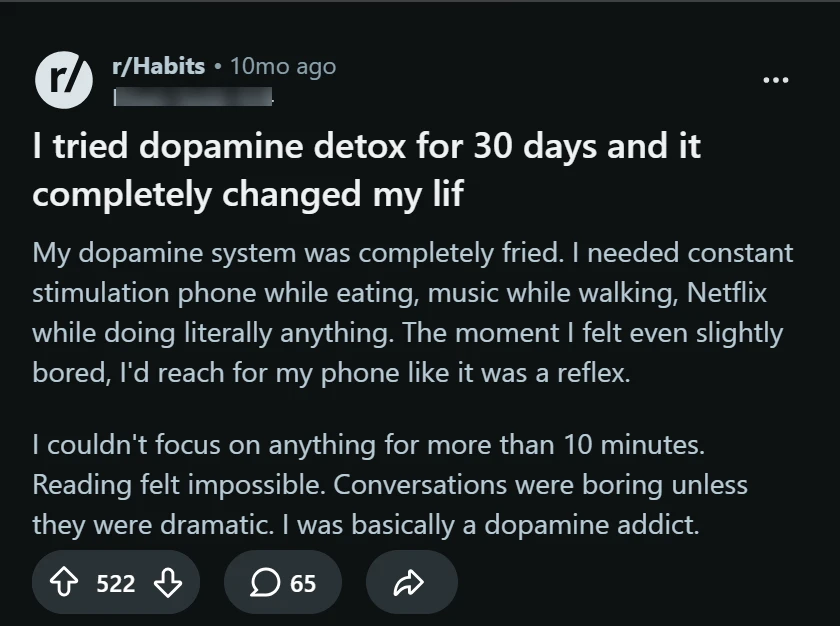
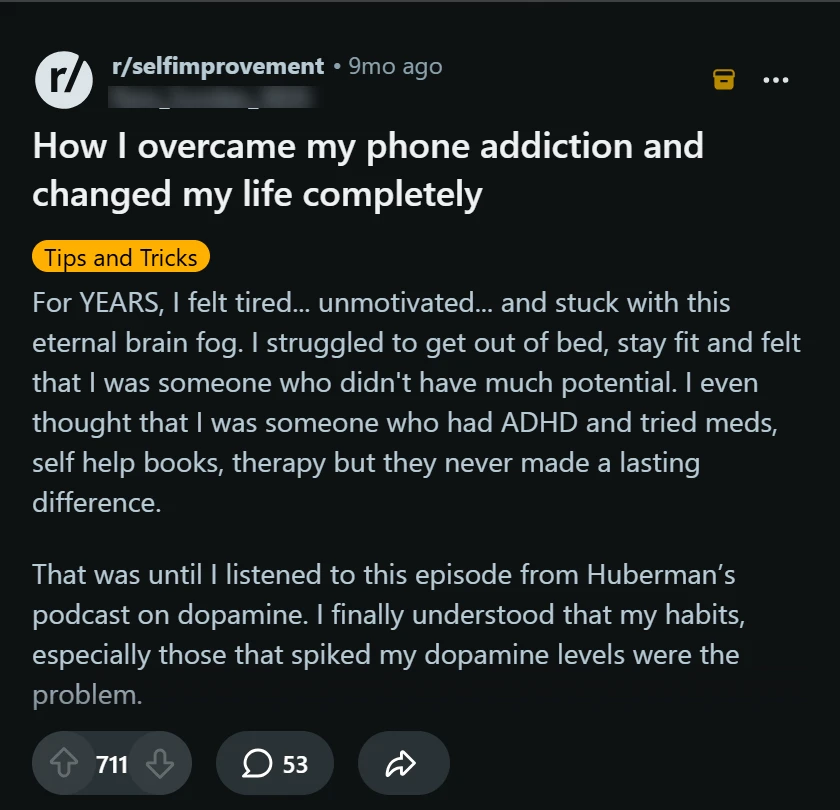
None of this is a medical claim. It’s behaviour design, built on how reward learning actually works – sourced at the bottom of this page, no need to take the word of a random sales page.
The protocol
A calibration problem needs a calibration protocol. Here’s yours, day by day.
Everything’s laid out as simply as possible. No fluff or filler. Each day is one short card: open it, run the steps, done. No planning, no research, no working out what to do when the itch hits – those decisions are already made. You just follow the sequence.
Day 0 – The Lockdown (tonight, ~30 minutes)
Tap through the done-for-you phone and environment setup. Escape routes closed before you go to bed – by settings, not willpower.
Day 1 – The First Reclaim Guarantee Day
Your first 2-hour unbroken block, fully scripted: when, where, and exactly what to do at minute 12 when the itch hits. The day the guarantee is built on.
Day 2 – The Reframe
The mental shift that switches off the struggle: you’re not giving anything up, you’re escaping something. This starts the recalibration.
Day 3 – The Boredom Rep
Boredom tolerance is a muscle and yours has atrophied. One simple rep today starts rebuilding it – including the ‘no-input’ trial which is often the turning point.
Day 4 – The Replacement Map
Removal without replacement is why every detox fails. Today you install what fills the hours you’ve reclaimed.
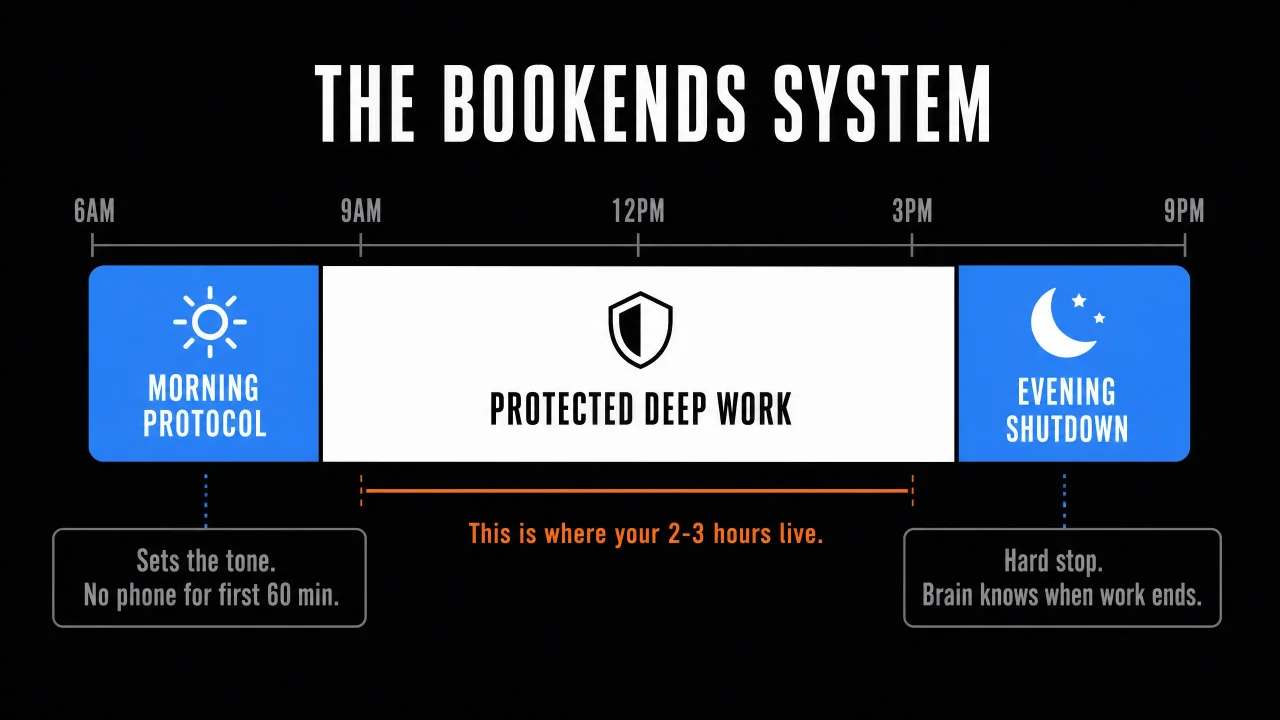
Day 5 – The Bookends
Your first hour and last hour, pre-built. Own the edges of the day and the middle follows.
Day 6 – The Second Block + The Stress Drill
Repeat the day 1 deep work block under harder conditions, and rehearse the moment stress or boredom pushes you to the phone.
Day 7 – Consolidation + The Bridge
Lock in the week, measure the shift, and get the honest map of what comes next.
Everything included
Here’s everything you get when you start today
The complete 7-Day Brain Reclaim Protocol
Built mobile-first, because you’ll read it on the device we’re retraining
Eight daily Action Cards (Day 0–7)
Each one read in minutes, every decision pre-made
The Stimulation Audit
Find your personal attention leaks in minutes, not hours
The Lockdown Walkthrough
Done-for-you phone and environment configs
The 7-Day Protocol Tracker
Track your progress through the week
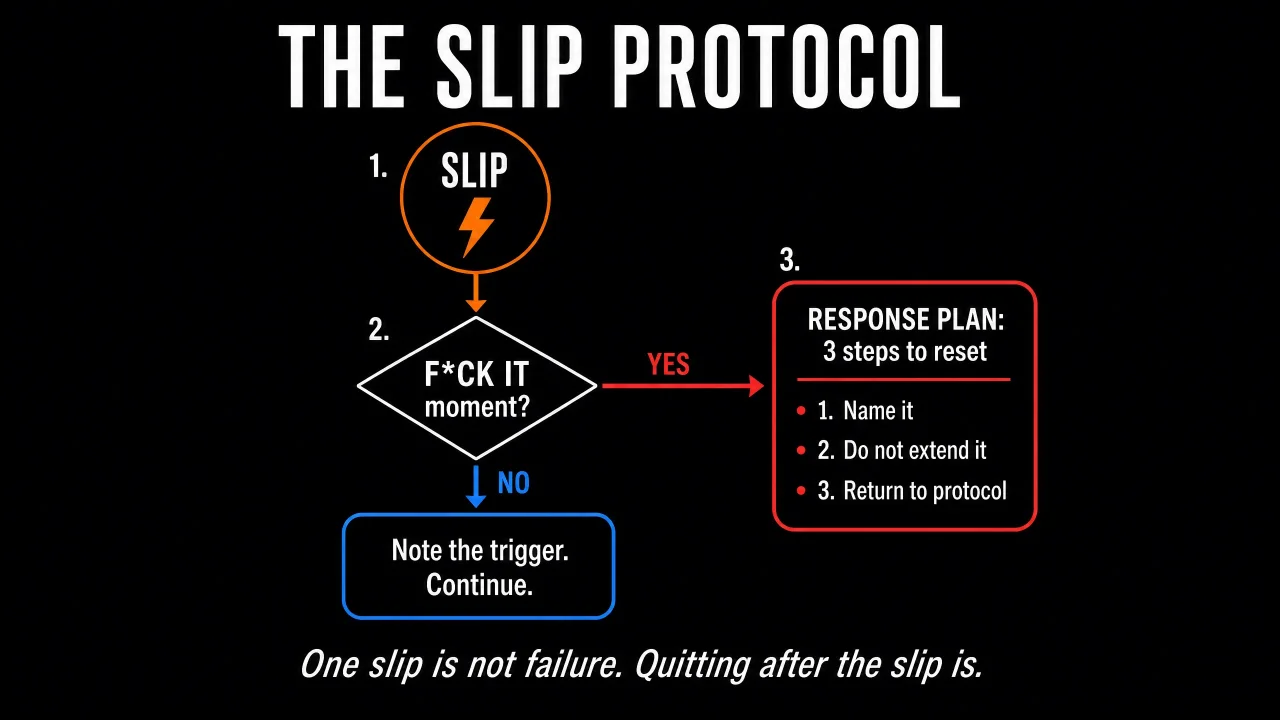
Bonus: The Slip Protocol
The emergency plan for if you have a slip up – so one slip never becomes a lost week
Bonus: The Gents Room
A free private Telegram group of men running the same protocol. Your invite arrives with your access email. You’re not doing this alone.
Lifetime access. One-time payment. No subscription.
How it works
Three steps. The first one takes two minutes.
Get instant access tonight.
One payment, $27, everything unlocks immediately.
Run the Lockdown.
Thirty minutes tonight, most of it is tap-through. Triggers mapped, access closed, environment set.
Take back two hours tomorrow morning.
Scripted start to finish. Feel the difference on Day 1 – then let Days 2–7 make it permanent.
Two guarantees and no risk
The Day 1 Guarantee
Run Day 0 tonight and Day 1 tomorrow. If you don’t get your first two unbroken hours of real focus as promised, send one email and every cent comes back. No questions, no hoops. We’re certain this works.
And beyond that: run the full protocol, and if within 30 days you don’t feel a real, noticeable shift in your focus and attention, same deal. One email. Full refund.
You risk nothing. The feed costs you 2–3 hours every day.
What it’s worth – honestly
Men in your position spend $150 a year on blocker apps they bypass, $597 on video courses they never finish, and $200 an hour on help most can’t access. This is $27, once – and it goes straight to the heart of it.
Everything you get today:
7-Day Brain Reclaim Protocol (complete guide) · 8 Daily Action Cards · The Stimulation Audit · The Lockdown Walkthrough · 7-Day Tracker · The Slip Protocol · Free private Telegram group · Lifetime access, no subscription
Price: $27, one-time payment, lifetime access
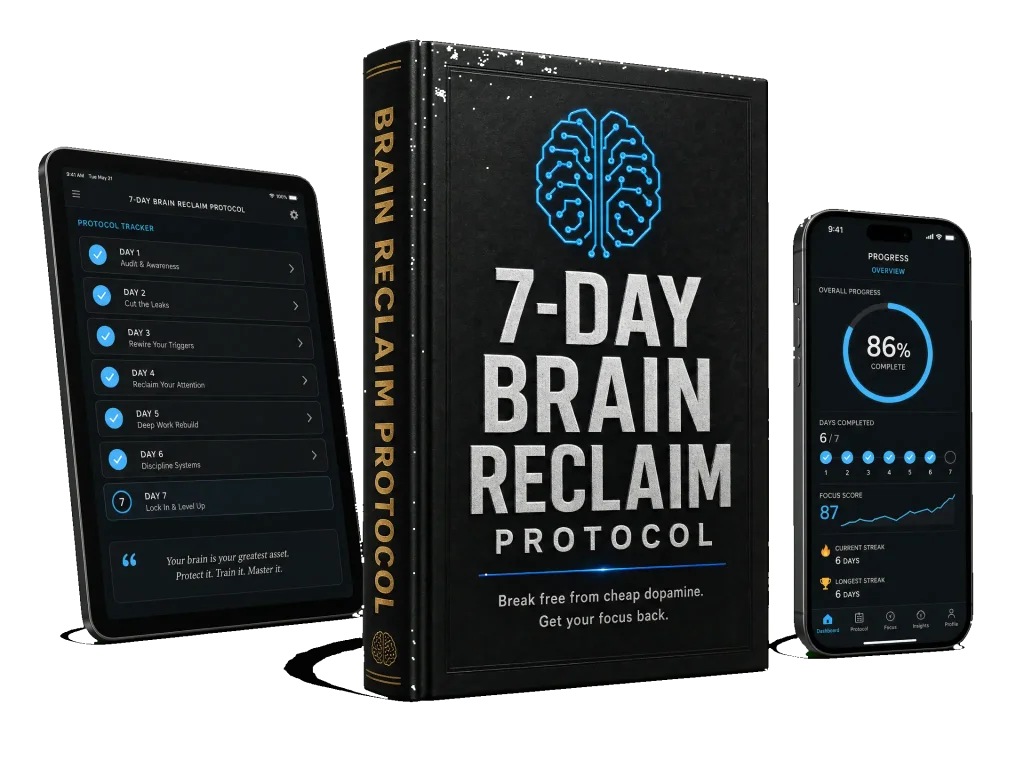 ⬇Digital Protocol · Instant Download
The part you already know
Nothing on this page is as expensive as changing nothing.
Here’s some quick math: two drifted hours a day (and you know it’s probably more) is over 700 hours a year. A month of waking life, every year, paid to the feed. Not for rest. Not even for real pleasure. For nothing you can remember a week later.
You’ve felt the other cost too, the one that doesn’t fit in numbers. The projects that stay ideas. The book on the nightstand. The 45-minute task that finishes at 10pm. The nagging suspicion that you’re capable of far more than your days are showing.
Seven days from now, you can be in one of two places. Either trying to fight the same loop with willpower, or on Day 7 of the protocol – with two deep focus blocks behind you, the escape routes closed, and your attention starting to feel like yours again.
You already know what’s in the way of a better version of you. The only question is how many more of your best weeks go to the screen before you act on it.
P.S. – If you only remember one thing from this page: your focus didn’t break. It was calibrated away from you, by design – and anything calibrated can be recalibrated. Day 0 takes half an hour tonight. Day 1 pays you back two hours tomorrow. And if it doesn’t, one email gets you a full refund. The only losing move is the loop.